THE SNACK
MONKEY
Not a diet book. A behaviour book. There's a difference — and it matters enormously at nine o'clock on a Tuesday evening.
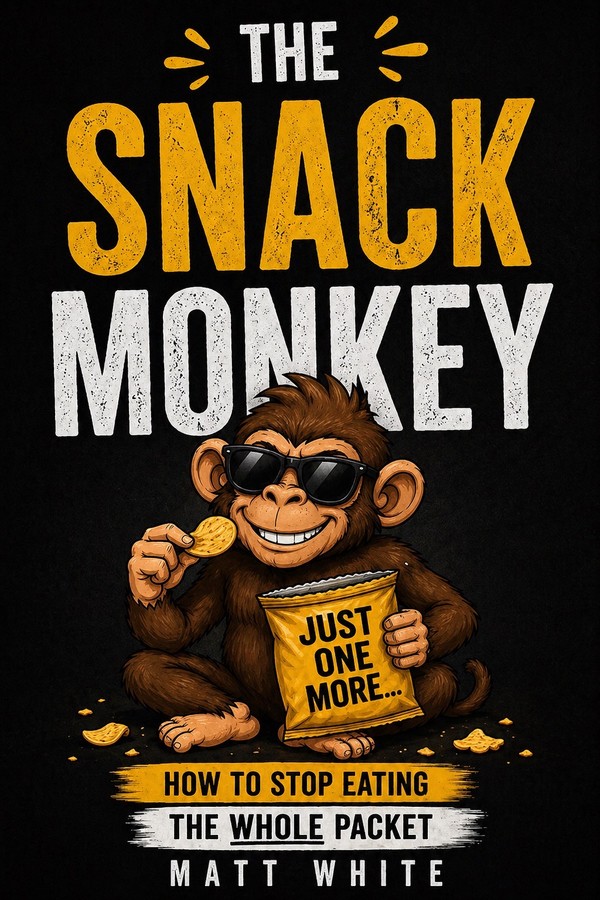
The Snack Monkey
How to Stop Eating the Whole Packet
Picture the scene. It's late evening. You're standing in the kitchen. You didn't come in for food — at least, that's what you told yourself when you got up from the sofa. You came in for a glass of water.
And yet somehow you're standing there holding a packet of biscuits.
What follows is not a failure of discipline. It's not a lack of willpower. It's the Snack Monkey — the part of your brain that doesn't care about your long-term goals, your healthy eating plan, or the vegetables you bought with such misplaced optimism on Sunday afternoon.
The Snack Monkey cares about snacks. Right now. And it is extremely good at making that sound reasonable.
"The greatest trick the Snack Monkey ever pulled was convincing people it doesn't exist. Instead, people believe something is wrong with them. They think they lack discipline. Which is exactly what the Snack Monkey wants them to think — because if you believe the problem is you, you'll never look for the Monkey."
This book is everything Matt White has learned about why people eat the way they do, why plans fail, why willpower runs out, and what you can actually do about it. Written to feel like a conversation rather than a lecture. Because the science behind all of this is genuinely fascinating — but only if it works on a real Tuesday evening, when the packet is already open and the Snack Monkey is already making its case.
What This Book Is Not
It's not a diet plan. No macros. No meal plans. No "eat this, avoid that."
It's not a lecture about willpower — because willpower isn't the answer. If it were, the problem would have been solved a very long time ago.
It's not a book that requires you to be perfect, because perfection is not the goal. And frankly, perfection makes for very dull reading.
The Cast

The Captain
The rational part of your brain. Plans things. Sets goals. Buys vegetables on a Sunday with a level of optimism that rarely survives until Wednesday. Wants what's best for you long-term. Gets tired. Often outnegotiated.

The Snack Monkey
Doesn't care about your goals. Cares about snacks. Charming, persuasive, patient — with excellent timing. Not malicious. Just operating on very old software in a world that was specifically designed for it. That's the problem.
 Instagram
 LinkedIn